
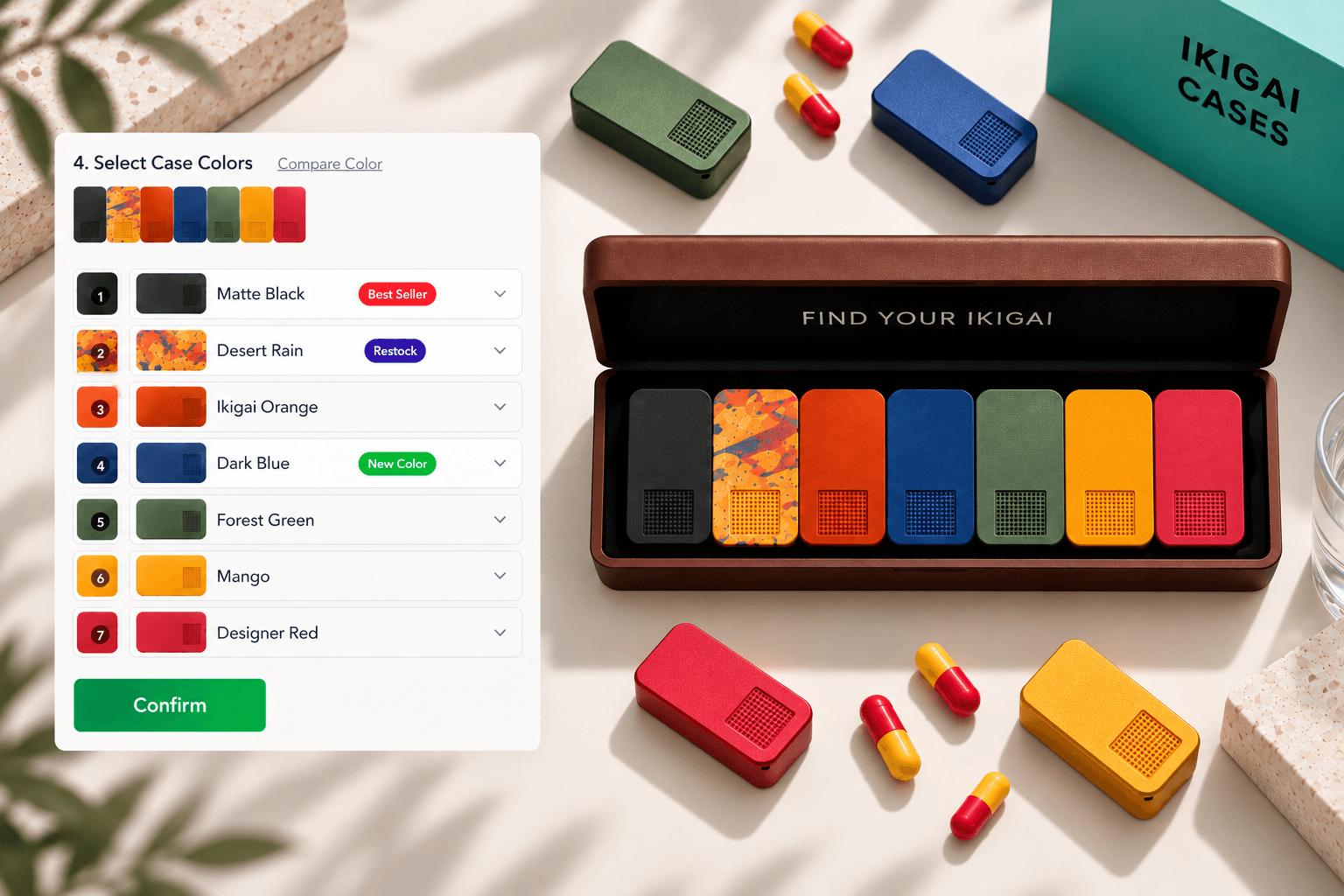
Preserving configurable pill case bundles across Shopify
Keep configured sets identifiable through cart, checkout, and reorder while preserving physical component variants.
Consumer goods · 2026
Why should we trust you with difficult client work?
I take the technically difficult parts of Shopify builds — the ones that hold up a timeline because nobody is sure they are possible. Most of my work has been inside agency delivery, in existing codebases, alongside a designer and a PM.
Scope
Commerce logic, checkout surfaces, configurators, catalog and data work. I do not need the whole project — I need the whole problem.
3 areas · no records required
Evidence
3 published · outcomes verified
Keep configured sets identifiable through cart, checkout, and reorder while preserving physical component variants.
Consumer goods · 2026

Two built to order club lines needed guided configuration inside one theme, although LAB Golf depended on Hulk Product Options while Miura composed catalog variants natively.
Golf equipment retail · 2026

The old site's browse structure, its brand directories and style and colour indexes and editorial collection pages, had no equivalent in Shopify's product model and still had to survive the move.
Luxury menswear and footwear retail · 2025
Delivery
Working with designers and PMs, inheriting themes, feature branches and small PRs, written status, QA, and documentation for whoever inherits the work.
Judgment
The requirement sets the boundary. The decision is which layer owns each part, and what that costs.
Worked decision
Theme
Displays allocations
Used here
Shopify Function
Carries value and applies discounts
Used here
Checkout UI Extension
Admin configuration
Campaign setup
Used here
App
External service
Stack
Secondary to the work. Kept off the homepage deliberately.
Placeholder copy
Available for senior subcontract work now, and open to a permanent role with a team that has enough hard Shopify problems to keep one engineer busy.
I reply within one business day.